How Many Credits Do You Need for an Associate's Degree
Are you considering pursuing an associate's degree but wondering about the requirements? One of the most common questions prospective students ask is: how many credits do you need for an associate's degree? Understanding credit requirements is essential for planning your educational journey, managing costs, and setting realistic timelines for completion.

Understanding Associate's Degree Credit Requirements
The standard credit requirement for most associate's degrees is approximately 60 semester credit hours. This represents half the credits typically required for a bachelor's degree, which is usually 120 semester credits. However, it's important to note that exact requirements can vary depending on the institution, program, and academic calendar system.
These credits are generally distributed across several categories:
- General Education Requirements: Usually 30-36 credits covering subjects like English composition, mathematics, humanities, social sciences, and natural sciences
- Major-Specific Courses: Typically 18-30 credits focused on your chosen field of study
- Electives: The remaining credits (usually 3-12) that allow you to explore other interests or supplement your major
Most individual courses at the associate's degree level are worth 3-4 credits each, meaning students typically need to complete about 20 courses total. Full-time students usually take 4-5 courses (12-15 credits) per semester, while part-time students might take 2-3 courses (6-9 credits).
In addition to accumulating the required number of credits, students must typically maintain a minimum GPA (often 2.0 on a 4.0 scale) to earn their associate's degree.
How Long Does It Take to Get an Associate's Degree?
Although associate's degrees are commonly referred to as "two-year degrees," the actual time to completion can vary significantly based on several factors. Understanding these variables can help you plan your educational timeline more effectively.
Full-Time vs. Part-Time Enrollment
The most significant factor affecting completion time is your enrollment status:
- Full-time students (taking 12+ credits per semester) typically complete their associate's degree in about 2 years (4-5 semesters)
- Part-time students (taking 6-9 credits per semester) may take 3-4 years or longer to complete the same degree
Academic Term Structure
The structure of academic terms at your institution also impacts completion time:
- Semester systems (two 15-week terms per academic year) typically require four semesters for full-time students
- Quarter systems (four 10-week terms per academic year) usually require six quarters for full-time students
- Accelerated terms (8-week sessions) may allow faster completion if courses are available year-round
Program-Specific Factors
Several program-specific factors can affect your timeline:
- Course sequencing: Some courses must be taken in a specific order, which can extend completion time
- Prerequisites: Required preparatory courses may add to your total time
- Course availability: Not all courses are offered every term, which may cause delays
- Clinical or practicum requirements: Programs in healthcare and education often include required field experiences that follow specific schedules
Accelerated Options
Many institutions now offer accelerated paths to completion:
- Year-round study: Taking courses during summer terms can reduce overall time
- Online programs: Some online associate's degrees offer multiple start dates and compressed courses
- Accelerated formats: Some programs offer 7-8 week courses instead of traditional 15-week semesters
For working adults and those with family responsibilities, flexible and part-time options make associate's degrees accessible, even if they take longer than the traditional two years to complete.
Types of Associate's Degrees and Their Credit Requirements
While the standard 60-credit requirement applies to most associate's degrees, there are several different types of associate's degrees, each with its own focus and purpose. Understanding these differences can help you choose the right path for your educational and career goals.
Associate of Arts (AA)
The Associate of Arts degree typically focuses on liberal arts, humanities, and social sciences. These programs usually require:
- More general education credits (often 40+ credits)
- Fewer specialized major credits
- Designed primarily for transfer to four-year institutions
- Common fields include communications, English, history, psychology, and education
Associate of Science (AS)
The Associate of Science degree emphasizes mathematics and natural sciences. These programs typically feature:
- A balance of general education and specialized courses
- More math and science requirements than AA degrees
- Often designed for transfer to four-year STEM programs
- Common fields include biology, chemistry, physics, computer science, and pre-engineering
Associate of Applied Science (AAS)
The Associate of Applied Science degree is career-focused and designed for direct workforce entry. These programs usually include:
- Fewer general education credits (often 15-20 credits)
- More specialized technical and career-focused courses
- Less emphasis on transferability to four-year programs
- Common fields include healthcare, information technology, automotive technology, and culinary arts
Other Specialized Associate's Degrees
Several other specialized associate's degrees exist with similar credit requirements but different focuses:
- Associate of Fine Arts (AFA): Focuses on visual or performing arts with more studio or performance credits
- Associate of Business Administration (ABA): Emphasizes business principles and practices
- Associate of Applied Business (AAB): Provides practical business skills for immediate employment
While the total credit requirement typically remains around 60 semester credits for all these degree types, the distribution of those credits varies significantly based on the degree's purpose and focus.
Transferring Existing Credits Toward an Associate's Degree
One of the most effective ways to reduce the number of credits you need to complete for an associate's degree is by transferring existing credits. Understanding transfer policies and options can save you significant time and money.
Transfer Credit Policies
Most institutions that offer associate's degrees accept transfer credits, but policies vary:
- Maximum transfer limits: Most schools limit transfer credits to 75% of the degree requirements (typically 45 credits for a 60-credit associate's degree)
- Minimum grade requirements: Transferred courses usually require a grade of "C" or better
- Accreditation requirements: Credits typically must come from regionally accredited institutions
- Recency requirements: Some technical or rapidly evolving fields may have time limits on transfer credits
Credit Evaluation Process
The process of transferring credits typically involves:
- Submitting official transcripts from all previously attended institutions
- Waiting for the receiving institution to evaluate your credits
- Receiving a transfer credit evaluation showing which credits were accepted and how they apply to your degree
This process can be time-consuming and sometimes frustrating, as credit evaluations are often done manually and can take weeks or even months to complete.
Advanced Credit Transfer Solutions
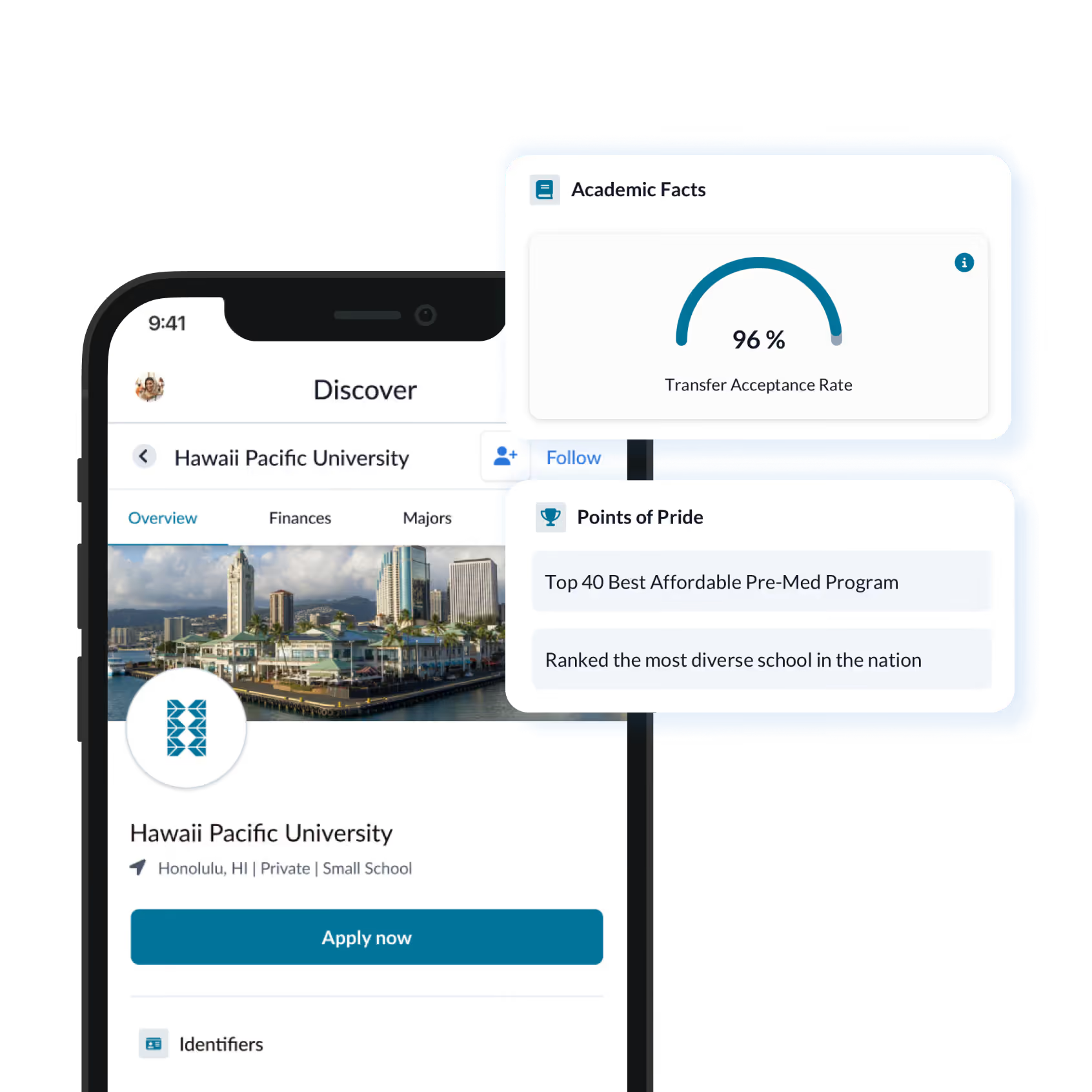
For students seeking a more efficient transfer process, AI-powered solutions like EdVisorly are transforming the experience. EdVisorly offers:
- Automated transcript processing with +99% accuracy
- Immediate transfer credit evaluations
- Clear course equivalency mapping
- Personalized transfer planning
These advanced tools eliminate much of the uncertainty and delay in the traditional transfer process, helping students maximize their existing credits and minimize time to degree completion.
Alternative Credit Options
Beyond traditional college transfer credits, several other options can help reduce the credits needed for your associate's degree:
- CLEP and DSST exams: Test out of introductory courses in various subjects
- Military training: Many institutions award credit for military service and training
- Prior Learning Assessment (PLA): Earn credit for work experience and professional certifications
- Dual enrollment/early college: Credits earned during high school through community college partnerships
High School to Associate's Degree Pathways
Many students now begin earning college credits while still in high school through:
- Dual enrollment programs: Taking college courses while in high school
- Early college high schools: Structured programs where students can earn significant college credit or even an associate's degree alongside their high school diploma
- Advanced Placement (AP) courses: College-level courses that can translate to college credit with qualifying exam scores
These pathways can significantly reduce the time and credits needed after high school to complete an associate's degree, potentially allowing students to transfer to a four-year university much sooner.
{{banner-1}}
Associate's Degree Costs and Financial Considerations
Understanding how many credits you need for an associate's degree is directly tied to understanding the cost of your education. The typical 60-credit requirement has significant financial implications that vary based on where and how you earn your degree.
Per-Credit Costs by Institution Type
The cost per credit hour varies dramatically based on the type of institution:
- Community colleges: $100-$200 per credit hour ($6,000-$12,000 total for 60 credits)
- Public four-year institutions: $300-$500 per credit hour for in-state students ($18,000-$30,000 total)
- Private colleges: $500-$1,000+ per credit hour ($30,000-$60,000+ total)
- Online programs: Vary widely, but often fall between $150-$400 per credit hour ($9,000-$24,000 total)
These figures typically include tuition only and don't account for additional fees, books, supplies, or living expenses.
Financial Aid for Associate's Degree Students
Several financial aid options can help offset the cost of earning an associate's degree:
- Federal financial aid: Complete the FAFSA to qualify for Pell Grants, work-study, and federal loans
- State grants: Many states offer need-based grants specifically for community college students
- Institutional scholarships: Many community colleges and other institutions offer merit-based scholarships
- Tuition-free programs: Some states now offer tuition-free community college programs for eligible residents
Cost-Saving Strategies
Several strategies can help reduce the overall cost of earning your associate's degree:
- Transfer credits: Bringing in existing credits reduces the number of courses you need to take
- Accelerated completion: Finishing faster means fewer semesters of fees and living expenses
- Open educational resources: Some programs use free or low-cost textbooks and materials
- Employer tuition assistance: Many employers offer tuition benefits for employees pursuing relevant degrees
Cost Comparison: Associate's vs. Bachelor's Degree
When comparing costs, associate's degrees offer significant savings compared to bachelor's degrees:
- Associate's degrees require half the credits (60 vs. 120)
- Community colleges typically charge lower per-credit rates than four-year institutions
- The shorter time frame means less spent on fees and living expenses
- Students can enter the workforce sooner, earning income rather than paying tuition
For many students, completing an associate's degree before transferring to a four-year institution represents the most cost-effective path to a bachelor's degree.
Where to Earn an Associate's Degree
When considering how many credits you need for an associate's degree, it's also important to understand where you can earn those credits. Different institutions offer different experiences, costs, and benefits.
Community Colleges
Community colleges are the primary providers of associate's degrees in the United States:
- Accessibility: Open admission policies make them accessible to most students
- Affordability: Significantly lower tuition than four-year institutions
- Transfer agreements: Many have articulation agreements with four-year universities
- Community focus: Programs often align with local workforce needs
- Support services: Many offer robust support for first-generation and non-traditional students
With over 1,000 community colleges nationwide, most Americans live within commuting distance of at least one community college.
Four-Year Universities
Some traditional four-year universities also offer associate's degrees:
- Integrated pathways: Seamless transition to bachelor's programs at the same institution
- Campus resources: Access to the facilities and resources of a larger university
- Prestige: Some students value the name recognition of a university
- Higher costs: Typically more expensive than community colleges
- Selective admission: May have more stringent entrance requirements
These programs often serve as stepping stones to bachelor's degrees at the same institution.
Online Programs
Online associate's degree programs have grown significantly in popularity:
- Flexibility: Coursework can be completed around work and family obligations
- Geographic freedom: No need to relocate or commute
- Varied formats: Synchronous, asynchronous, and hybrid options
- Accelerated options: Many offer compressed terms and year-round study
- Technology requirements: Require reliable internet and computer access
Online programs are particularly popular among working adults and those with family responsibilities.
Technical and Vocational Schools
Specialized schools focus on career-specific associate's degrees:
- Industry focus: Curriculum designed specifically for career preparation
- Hands-on training: Emphasis on practical skills and equipment
- Industry connections: Often have strong relationships with employers
- Specialized facilities: Purpose-built labs and training environments
- Limited general education: May offer fewer transferable credits
These institutions are ideal for students with clear career goals in specific technical fields.
Using an Associate's Degree as a Pathway to a Bachelor's Degree
For many students, completing an associate's degree is part of a larger educational strategy that includes eventually earning a bachelor's degree. Associate's degrees can serve as an efficient and cost-effective pathway to a bachelor's degree.
Articulation Agreements
Articulation agreements are formal partnerships between community colleges and four-year institutions that guarantee credit transfer:
- Guaranteed admission: Many agreements guarantee admission to the four-year institution for students who meet GPA requirements
- Course equivalencies: Clear mapping of which courses will transfer and how they apply to bachelor's requirements
- Maximum credit transfer: Often allow all or most associate's degree credits to transfer
- Program-specific pathways: Some agreements create seamless transitions for specific majors
These agreements eliminate much of the uncertainty in the transfer process.
General Education Fulfillment
One of the most valuable aspects of earning an associate's degree before transferring is the completion of general education requirements:
- Block transfer: Many four-year institutions accept a completed associate's degree as fulfilling all general education requirements
- Core curriculum completion: Even without block transfer, most general education courses transfer individually
- Focus on major: Transfer students can focus primarily on major-specific courses after transfer
This approach allows students to complete many of their general education requirements at a lower cost.
The "2+2" Model
The traditional transfer pathway follows a "2+2" model:
- 2 years (60 credits) at a community college earning an associate's degree
- +2 years (60 more credits) at a four-year institution completing bachelor's requirements
This model can save students significant money in the first two years of their education.
Transfer Planning Strategies
Successful transfer requires careful planning:
- Start with the end in mind: Research bachelor's degree requirements at potential transfer institutions
- Choose the right associate's degree: Select an AA or AS degree designed for transfer rather than an AAS. Transfer-focused degrees are specifically structured with courses that align with university requirements, maximizing your credit transfer and keeping you on the most efficient path to your bachelor's degree.
- Work with advisors at both institutions: Get guidance from both your current and future school
- Maintain a strong GPA: Most transfer scholarships and guaranteed admission agreements require minimum GPAs
- Complete key prerequisite courses: Some major courses require prerequisites that should be completed before transfer.
Download the EdVisorly app to stay on track with your transfer planning and connect directly with admissions teams at your target universities!
Career Value and Economic Benefits of Associate's Degrees
While knowing how to earn an associate's degree is important, understanding the value of completing that degree is equally crucial for your future success. Associate's degrees offer significant economic and career benefits compared to having only a high school diploma, setting you up for better opportunities whether you enter the workforce immediately or continue your education at a 4-year university.
Earnings and Employment Statistics
Data consistently shows the economic advantage of earning an associate's degree:
- Higher earnings: Associate's degree holders earn approximately $1,058 per week compared to $899 for those with only a high school diploma (Bureau of Labor Statistics)
- Lower unemployment: The unemployment rate for associate's degree holders is approximately 2.7% compared to 3.9% for high school graduates
- Lifetime earnings: Over a 40-year career, associate's degree holders earn approximately $400,000 more than those with only a high school diploma
These statistics demonstrate the tangible financial return on investing in an associate's degree.
High-Demand Careers Requiring Associate's Degrees
Many well-paying careers require an associate's degree as the typical entry-level qualification:
- Healthcare: Dental hygienists ($77,810 median annual salary), radiologic technologists ($61,980), respiratory therapists ($61,830), registered nurses ($77,600 in some states)
- Technology: Computer support specialists ($57,910), web developers ($77,200), network specialists ($60,370)
- Applied Sciences: Electrical engineering technicians ($63,640), environmental science technicians ($47,370)
- Business: Paralegals ($56,230), accounting technicians ($45,560)
- Skilled Trades: HVAC technicians ($48,630), construction managers ($98,890 with experience)
These careers offer solid middle-class incomes with just two years of education.
Employer Perspectives
Employers increasingly value associate's degrees for several reasons:
- Practical skills: Many associate's programs emphasize hands-on, practical training
- Technical knowledge: Programs provide specialized knowledge relevant to specific industries
- Soft skills development: General education components develop communication and critical thinking
- Demonstrated commitment: Completion shows persistence and dedication
- Industry certifications: Many programs incorporate industry-recognized certifications
For many employers, an associate's degree represents the ideal balance of theoretical knowledge and practical skills.
Ready to Transfer from Community College to Your Dream University?
EdVisorly empowers you to discover universities, get instant transfer credit evaluations, and connect directly with admissions teams—all in one mobile app.
Download the EdVisorly app and start your transfer journey today! 👋
Frequently Asked Questions
How many credits are 2 years of college?
Two years of full-time college typically equals 60 semester credit hours. This represents the standard requirement for most associate's degrees and is half the credits needed for a bachelor's degree (120 credits). Full-time students usually complete 12-15 credits per semester, taking 4-5 courses each term to reach this total over four semesters.
What is the fastest way to get an associate's degree?
The fastest path to an associate's degree involves maximizing transfer credits and accelerated options. Start by transferring existing college credits, CLEP exam credits, or military training credits to reduce your required coursework. Then consider year-round enrollment, accelerated 8-week courses, or online programs with multiple start dates. With AI-powered tools like EdVisorly, you can get instant transfer credit evaluations to see exactly how your existing credits apply, eliminating the weeks-long wait of traditional credit evaluation processes.
How many credits make up an AA?
An Associate of Arts Degree (AA) typically requires 60 semester credit hours. These credits are usually distributed as 40+ credits in general education (liberal arts, fine arts, humanities, and social sciences), with the remaining credits in electives. AA degrees are specifically designed for students planning to transfer to four-year universities to complete their bachelor's degree.
How many hours are in a 2 year degree?
A two-year associate's degree requires approximately 60 semester credit hours. Each credit hour represents roughly 15 hours of classroom instruction plus additional study time. This translates to about 900 hours of classroom time, plus homework and study time. The actual calendar time varies based on enrollment status—full-time students typically complete it in 2 years, while part-time students may take 3-4 years.
Similar Guides
How Many Credits Do You Need for an Associate's Degree
Are you considering pursuing an associate's degree but wondering about the requirements? One of the most common questions prospective students ask is: how many credits do you need for an associate's degree? Understanding credit requirements is essential for planning your educational journey, managing costs, and setting realistic timelines for completion.

How to build your target university list as a transfer student
Almost every guide to building a college list was written for a high school senior. They open the Common App for the first time, look up freshman acceptance rates, compare test score percentiles, and sort schools into reach, target, and safety.

STEM majors: the full list, what counts, and what doesn't
Search whether your major counts as STEM and you will find confident answers that contradict each other. One page says nursing is STEM. The next says it definitely is not. Both sound authoritative, and neither explains why they disagree.

Colleges with the lowest acceptance rates in 2026 (and what that means if you’re transferring)
Every spring, the same headlines make the rounds. A handful of universities announce that they turned away 95 or 96 out of every 100 people who applied, and the numbers get passed around as a kind of shorthand for how hard college admission has become.

How to request your college or high school transcript
Somewhere on your transfer application checklist is a line that reads "official transcript required," which means it has to come from your school, on their timeline, through whatever system they happen to use.

Subsidized vs. unsubsidized student loans: what's the difference, and which should you take first?
Your financial aid offer shows up and it lists two loans: a Direct Subsidized Loan and a Direct Unsubsidized Loan. The amounts are different, the names sound almost identical, and nothing on the page explains why you were offered both or what separates them.